lundi 9 juin 2014

Fumito Ueda toujours fond sur The Last Guardian

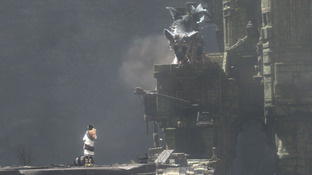
Sans jamais mentionner les rumeurs de son départ de Sony, Fumito Ueda confirme sur son compte Twitter qu'il est bien toujours activement au travail sur The Last Guardian. La question est donc de savoir si le créateur œuvre toujours au sein de la Team Ico ou s'il est désormais indépendant.

Fumito Ueda toujours à fond sur The Last GuardianFumito Ueda toujours à fond sur The Last GuardianFumito Ueda toujours à fond sur The Last Guardian
  • The Last Guardian PS3
  • jeudi 29 mai 2014

    E3 2011 Les features de la Vita en vido

    Savoir que la Playstation Vita existe, c'est bien, mais quelles sont les fonctionnalités proposées par la console ? Avouez que cette question vous taraude n'est-ce pas ? Voici donc une vidéo qui revient sur quelques features de la nouvelle portable de Sony.

    Si rien ne s'affiche après plusieurs secondes d'attente :

    Vérifiez que JavaScript n'est pas désactivé.Vérifiez si votre Player Flash est en version 8 ou plus.Pour télécharger la dernière version de Flash Player

    mercredi 28 mai 2014

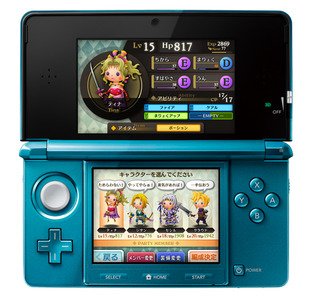
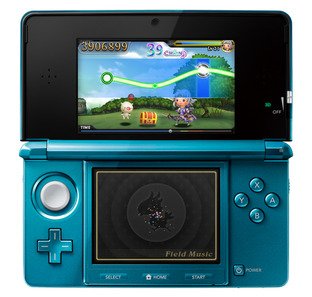
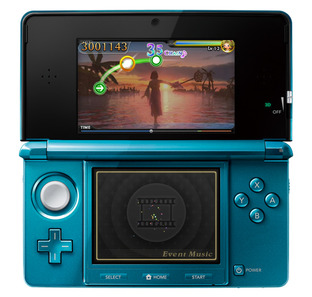
    TGS 2011 Images et vidos de Theatrhythm Final Fantasy

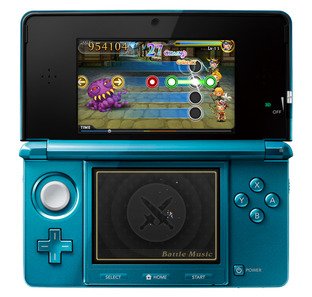
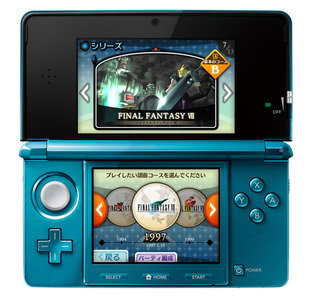
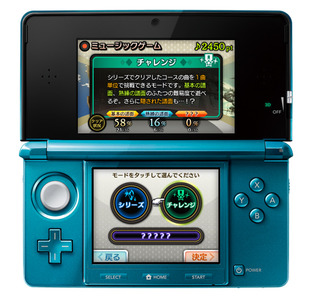
    Après le trailer de Theatrhythm Final Fantasy diffusé hier, en voici non pas un mais deux de plus. Cerise sur le gâteau, le tout est saupoudré de nouvelles images de ce jeu de rythme issu de la célèbre saga de Square Enix. Le tout sortira en exclusivité sur Nintendo 3DS à une date indéterminée.

    TGS 2011 : Images et vidéos de Theatrhythm Final FantasyTGS 2011 : Images et vidéos de Theatrhythm Final FantasyTGS 2011 : Images et vidéos de Theatrhythm Final FantasyTGS 2011 : Images et vidéos de Theatrhythm Final FantasyTGS 2011 : Images et vidéos de Theatrhythm Final FantasyTGS 2011 : Images et vidéos de Theatrhythm Final Fantasy
  • Theatrhythm Final Fantasy 3DS
  • mardi 27 mai 2014

    Coque iPhone 6 vers une coque en aluminium et un écran légèrement incurvé

    Coque iPhone 6
    A chaque semaine sa rumeur concernant Coque iphone 6, une fois n’est pas coutume c’est à nouveau l’écran du prochain smartphone d’Apple qui fait parler, et l’on entend revenir les échos d’une dalle légèrement incurvée.
    écran plus grand, en deux tailles, avec des définitions différentes, cristal de saphir pour tous ou finalement pour la version la plus évoluée… les rumeurs concernant l’écran du prochain iPhone d’Apple sont légion, et la tendance n’est pas prête de se calmer.
    Selon le blog japonais Mac Otakara qui cite des sources internes à Apple décrites comme fiables, l’coque iphone 6 pourrait finalement afficher un écran dont les bords seraient légèrement incurvés. Un design proche de ce que proposait Samsung dans son Galaxy S III et qui aurait pour but de proposer une meilleure immersion…
    Au passage, les bords du smartphone seraient également arrondis, et le design général du terminal pourrait se rapprocher de celui d’un iPhone auquel on aurait ajouté une coque comme celle proposée par Squair, formant une sorte de parechoc en aluminium tout autour de l’appareil, avec toutefois un embonpoint moins marqué.
    Le blog indique également qu’Apple en finirait avec ses coques en plastique ou en verre, et que le chassis en aluminium de l’coque iphone 6 serait associé à une coque en aluminium elle aussi. Si la rumeur se confirme, espérons simplement qu’Apple aura trouvé une parade aux problèmes de perturbation de l’antenne du smartphone.
    La rumeur des écrans aux bords incurvés ne date pas d’hier, puisque Bloomberg en parlait déjà au mois de novembre dernier, ajoutant au passage que les écrans seraient également sensibles à la pression, permettant à Apple d’exploiter de nouvelles interfaces logicielles.

    jeudi 22 mai 2014

    Intel flirts with exascale leap in supercomputing

    (Phys.org) -- If exascale range is the next destination post in high-performance computing then Intel has a safe ticket to ride. Intel says its new Xeon Phi line of chips is an early stepping stone toward exascale. Intel on Monday announced its high performance chip family as Xeon Phi at the International Supercomputing conference in Hamburg, Germany. Xeon Phi is now the brand name for future Intel’s Many Integrated Core (MIC) architecture-based products. The announcement was obviously made at the right venue. The ISC is a key gathering for high-performance computing, networking and storage experts.

    Intel chips are used in the majority of the 500 fastest supercomputers. The chip family. Intel has commitments from a number of computer partners, say reports, to make use of the Xeon Phi in their roadmaps. In its press announcement, Intel noted that its acquisition of Infiniband and interconnect assets from QLogic and Cray further present areas for Intel to innovate in delivering future scalable exascale-class platforms.

    Supercomputers can harness the parallel-processing capabilities of graphics processors and chips like Phi to carry out complex calculations in scientific and math research. The task of building specialized chips that can execute more calculations per second while keeping power consumption in check, though, is not trivial. Intel is targeting no sooner than 2018 as the year it reaches “exascale performance.”

    mercredi 19 juin 2013

    Nintendo sells 100 million DS consoles

    Enlarge

    Nintendo said sales of its handheld DS have topped 100 million machines less than five years since its launch, reaching the milestone faster than any other game console.

    Worldwide sales of the dual-screen DS passed 100 million on March 6, including the original model -- which was launched in November 2004 -- as well as the DS Lite and DSi, Nintendo said in a statement Wednesday.

    The success of

    "We aim to shift from one machine for one family to one machine for one person," the Kyoto-based company said.

    The latest model with built-in cameras, the DSi, went on sale in Japan in November and is due to be released in the United States in April.

    The DS trumped Sony's economic downturn better than other electronics makers.

    (c) 2009 AFP

    lundi 20 mai 2013

    A Laptop Circle of Trust

    Laptop computers are quickly becoming standard-issue equipment for enterprise workforces across the globe, but the productivity gained from this added mobility comes at a price: increased exposure to theft, loss and damage.

    Luckily, IT managers seeking to safeguard mobile data have a growing number of options at their disposal.

    One such option is Seagate's fully encrypted Momentus FDE.2. On March 12, Seagate began shipping the drive to ASI Computer Technologies to be used in notebook PCs with hardened security. ASI is a hardware component distributor catering to white-box system integrators and is using the disks in machines branded for sale under the integrators' names.

    The Momentus FDE.2 employs a dedicated ASIC to process the drive's AES 128-bit encryption on the fly. This enables SATA 1.5G bps transfer speeds on the 5,400rpm drive while minimizing load on a host machine's CPU. The drives will come in 80, 120 and 160GB capacities.

    Seagate officials claim that the Momentus FDE.2's native hardware-based encryption gives it a performance edge over software-based encryption programs such as Microsoft Windows Vista's BitLocker and TrueCrypt, an open-source encryption application.

    IT managers will be glad to know that Seagate's hardware-based encryption is always turned on and, perhaps more importantly, users cannot turn it off. After all, no security scheme is effective without consistent application in the field. Moreover, full disk encryption relieves the burden on users to remember to save sensitive files to specific folders or volumes on the drive.

    To complete the circle of trust, ASI has incorporated Wave Systems' Embassy Trust Suite management tools. Wave's software handles management of keys and passwords, TPMs (trusted platform modules) and authentication with biometric, smart card and Windows domain logins.

    According to Lark Allen, Wave Systems' executive vice president of corporate development, Wave has licensed software to most TPM chip manufacturers, and the company's Embassy software suite supports all existing TPMs. However, the current version does not support single sign-on. Therefore, users logging in with a fingerprint scan will be prompted for a password when starting up their systems and each time after the hard drive is power cycled.

    Wave officials indicated that they would be working with OEMs and BIOS vendors to add that functionality in the future.

    IT administrators can also access Seagate's DriveTrust security features built into the Momentus firmware with Wave's Embassy software. For example, the Momentus can store login and password pairs for as many as four users and four administrators. Regular user privileges are limited to log-in and password changes.

    Administrators can add or remove users, assign recovery passwords and perform the "crypto erase" function to quickly and safely repurpose or retire disks storing sensitive data.

    Seagate also will also begin shipping this month its second generation of high-performance 2.5-inch notebook hard drives. The turbocharged 7,200rpm Momentus disks will feature perpendicular recording technology, a 3G bps SATA interface and Seagate's optional G-Force protection.

    Already available on Seagate's Barracuda and Cheetah product lines, G-Force technology bolsters resistance to damage of the drive's delicate platters, heads and spindle motors from nonoperational shock.

    Similarly, Dell's StrikeZone technology, available on select models from its Latitude and Precision lines, uses specialized damping materials to cushion notebook hard drives and make them more durable.

    Lenovo and Toshiba take a more active approach to this problem, utilizing motion sensors to detect impacts and sudden motions. When detected, hard drives are temporarily parked to protect the head and platter in a fall.

    Lenovo offers this feature, called the Active Protection System, on select ThinkPad models. Toshiba's version, dubbed HDD Protection, is available on a number of Toshiba's Portege and Tecra laptops.

    Copyright 2007 by Ziff Davis Media, Distributed by United Press International